
Phytoremediation
Our lab focuses on phytoremediation, or the use of plants to restore soil health. Clean soil is important for human and environmental health, but we have polluted many areas throughout the country and world. Using plants to help clean these soils provides a green solution to help improve our environment.
Studying phytoremediation requires a vast set of knowledge and skills. Understanding how metals are trafficked through the soil has both environmental and biogeochemical importance. This requires investigations of soil chemistry, plant chemical ecology, soil microbial ecology.
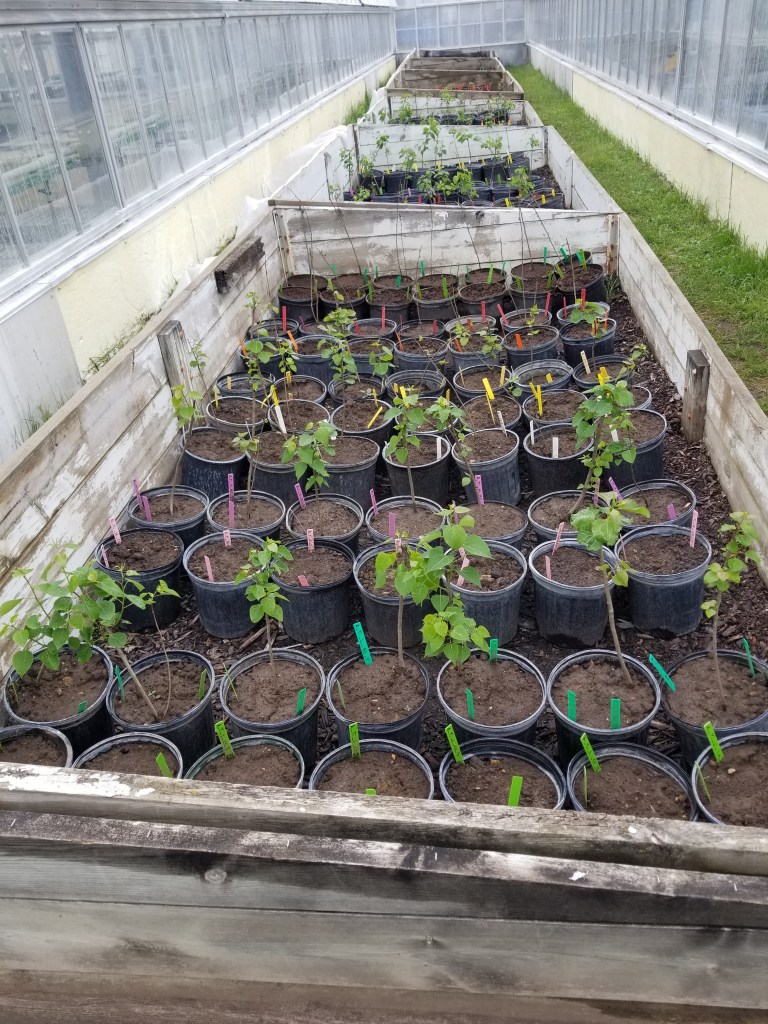
How Populus tremuloides responds metal contaminated soil
Populus tremuloides (trembling aspen) is a fast growing, metal tolerant, foundational species present through much of North America. These attributes mean aspen is great for phytoremediation. Aspen is known to have high intraspecific variation, but little work has been done to quantify the most common plant mechanisms for dealing with metal stress. We are currently investigating the metal stress induced metabolites produced by quaking aspen and the genotype differences in these compounds. Knowing what chemical responses allow species to best remediate specific contaminants allows us to select for the best genotypes for specific remediation sites

Genotypic variation of Cannabis response to metal contaminated soil
Like Populus tremuloides, Cannabis spp. has large intraspecific variation. Unlike aspen however, Cannabis is frequently consumed by humans. The classification of Cannabis as a schedule 1 drug in the US has limited our knowledge on its interactions with metals. We are working to understand what parts of the plant metals are stored in and if there are genotype differences in their response. This is important in understanding what genotypes may be hyperaccumulators and should be avoided for consumption purposes.
Metal-Plant-Insect interactions
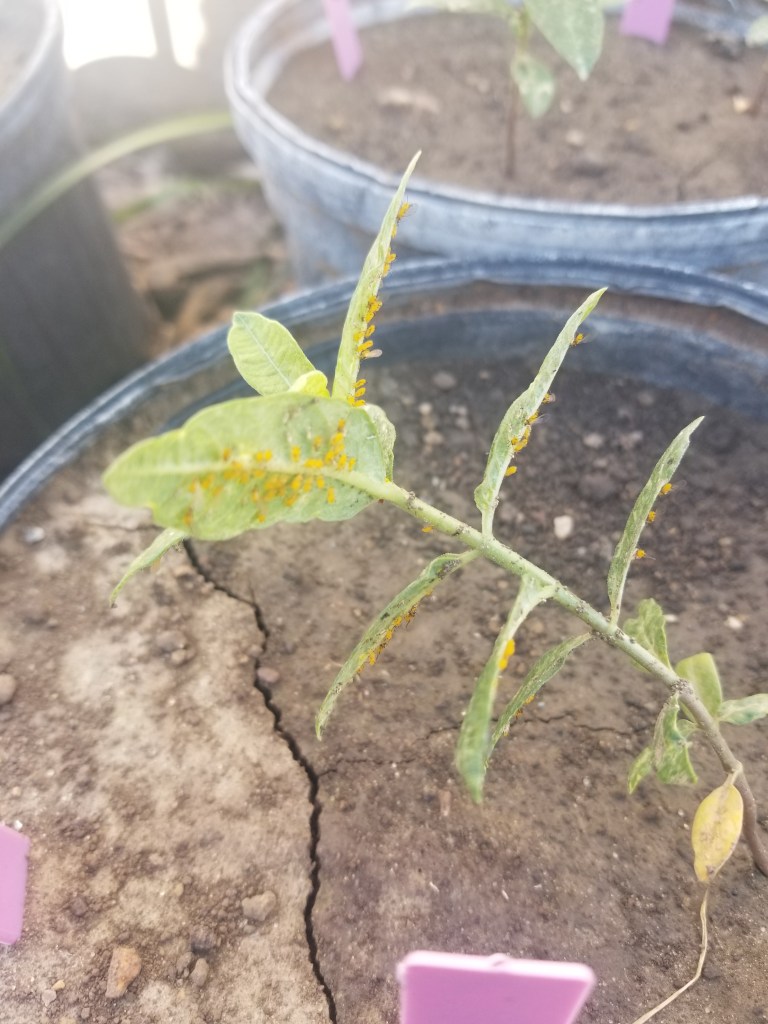
Crops used for phytoremediation and other plant species exposed to metal contamination still face the threat of herbivory. Investigating how this contamination affects plant defense as well as herbivores that feed on them will further our understanding of metal contamination on higher trophic levels.
 Zierden Lab